Most businesses we speak to in Dubai have been told to pick a side. One agency says SEO is the only thing that lasts. Another says Google Ads is the only thing that brings leads this month. Both are partly right, which is why the argument never ends.
We run SEO and Google Ads for UAE businesses side by side, often for the same client, in the same weekly meeting. What we have learned is simple: the two channels work better together than either does alone. Here is how they help each other, where they get in each other's way, and how to plan budget so both pull in the same direction.
“Ads tell you what people will pay to find. SEO lets you own that spot without paying for every click. Run them together and each one makes the other cheaper.”
Why SEO versus PPC is the wrong question
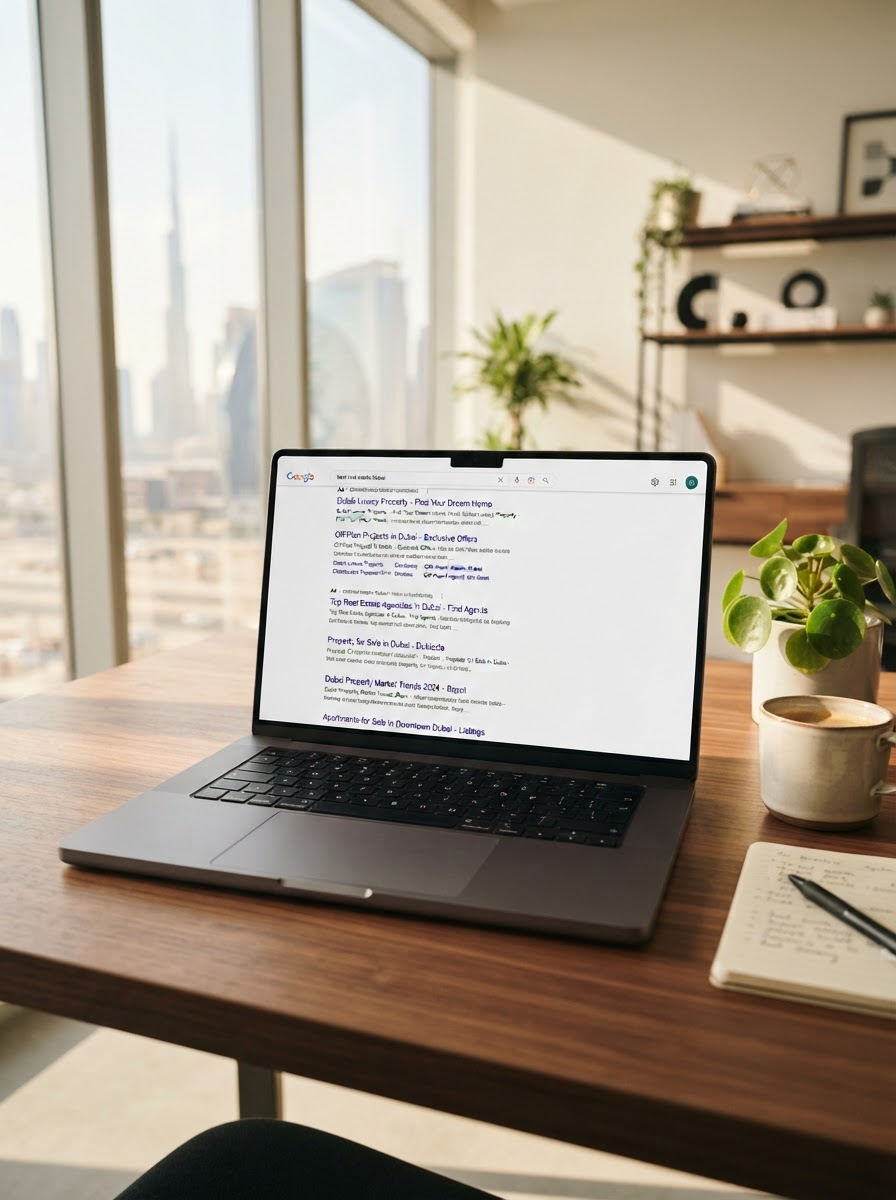
When someone searches "interior design company Dubai", Google shows sponsored results at the top and organic results below. The searcher does not care which is which. They care which business looks most relevant and most trustworthy.
Treating the two channels as competitors leads to two common mistakes. Some businesses run ads forever and never build the organic rankings that would bring the same clicks for free. Others pour everything into SEO and wait months with no leads, when ads could have been paying for the wait.
The better question is what role each channel should play this quarter, and how the data from one can make the other smarter.
What each channel does well
Google Ads (PPC) is fast and controllable. You choose the keywords, the locations, the hours and the budget. Results start within days. The trade-off is that traffic stops the moment you stop paying, and competitive terms in Dubai can be expensive per click.
SEO is slow to start and compounds over time. A page that ranks well keeps bringing visitors without a cost per click. It also builds trust, since many searchers skip ads and go straight to organic results. The trade-off is time: meaningful rankings for competitive terms usually take months, not weeks.
Put simply, PPC buys you visibility now. SEO builds visibility you own. Most businesses need both, in different proportions at different stages.
Five ways PPC and SEO make each other stronger
1. Use paid search terms to choose your SEO targets
The search terms report in Google Ads shows the exact phrases people typed before clicking your ad, and which of those phrases led to enquiries. That is real buying intent from your own market, not a keyword tool's estimate.
We use it to decide which pages to build or rewrite for SEO. If "office fit out company Business Bay" keeps converting in ads, that phrase deserves a strong organic page. You stop guessing which keywords matter.
2. Test titles and messages with ads before you rewrite pages
Rewriting a page title for SEO and waiting weeks to see if it works is slow. Ad headlines can be tested in days. When one headline clearly gets more clicks than another, that angle is a strong candidate for your page title and meta description.
The reverse also works. If a page already earns a high organic click-through rate in Search Console, its title is a proven message worth trying in your ads.
3. Cover the results page twice for the terms that matter
For your most valuable searches, appearing in both the sponsored and the organic results takes up more of the page and pushes competitors further down. It also reinforces your brand: a searcher who sees you twice is more likely to trust you.
This only makes sense for high-value terms. For everything else, once you rank well organically, it is usually better to move ad spend to terms where you do not rank yet.
4. Bring organic visitors back with remarketing
Most people do not enquire on their first visit. Someone who finds your blog post through Google may be weeks away from needing you. Remarketing lets you show ads to people who have already visited your site, so the organic traffic you earned is not lost when they close the tab.
This needs a proper consent setup and correct tracking, so check that before switching it on.
5. Shift budget as organic rankings mature
In the early months, ads carry most of the lead flow while SEO builds. As your pages reach strong organic positions for specific terms, you can reduce spend on those terms and move it to new ones. Over time, the same budget covers more ground.
“PPC data tells SEO what to target. SEO rankings tell PPC where it can step back. Review both in the same meeting, with the same keyword list in front of you.”
Where the two channels clash, and how to avoid it
Running both without coordination creates problems we see often in accounts we take over:
- Paying for clicks you would get anyway. Bidding on terms where you already rank first organically can waste budget. Check the overlap regularly and keep paid spend only where it adds something.
- Separate landing pages that compete. Ad landing pages copied from service pages can create duplicate content. Either keep ad pages out of the index or point ads at your main service pages.
- Two agencies, two stories. When SEO and PPC sit with different providers, each one claims credit for the same lead. One shared report with one source of truth fixes this.
- Brand terms left unprotected. If competitors bid on your business name, a small brand campaign stops them taking leads that searched for you by name.
How to split budget when you are starting out
There is no single right ratio, and anyone who quotes one without looking at your market is guessing. The split depends on three things.
- How soon you need leads. If enquiries need to start this month, ads take the larger share at first.
- How competitive your terms are. In crowded categories, organic rankings take longer, so ads carry the load for longer.
- What you already rank for. If your site already has some organic visibility, SEO can take a larger share sooner.
The pattern we use most often: start with ads carrying the lead flow while we fix the site's technical base and rebuild the key service pages. Then review the split every quarter as organic rankings grow.
Measuring both channels together
You cannot coordinate what you do not measure in one place. The setup we put in for every client covers four things.
- Link Google Ads and Search Console so you can see paid and organic performance for the same queries side by side.
- Track the same conversions in both. Form submissions, calls and WhatsApp clicks should count the same way whether the visitor came from an ad or from organic search.
- Record the source of every lead in your CRM, so you can see which channel brings enquiries that actually turn into business, not just clicks.
- Review monthly as one channel: spend, organic rankings, leads and cost per lead, all in one report.

Our take
PPC and SEO are not rivals. Ads give you speed, control and data. SEO gives you visibility you own and trust that ads cannot buy. The businesses that get the most from search use ads to learn and to fill the pipeline now, and use what they learn to build rankings that lower their costs later.
If you want to see how this would work for your business, book a call with our team. You can also read more about our SEO services and Google Ads management, or see the full range of digital marketing services we run under one roof.